Fire Retardant Fabrics and Circularity in Contract and Hospitality Projects

Fire retardant fabrics are essential in contract environments such as hotels, theatres and public spaces, where compliance with standards such as EN 13501, EN 13773 or BS 5852 is critical.
From curtain fabrics to upholstery and acoustic solutions, these materials are designed to meet highly demanding technical requirements.
However, there is one question that is rarely asked:
What happens to fire retardant fabrics when they reach the end of their life cycle?
In most cases, they become waste.
Textile circularity: beyond sustainability as a concept
Circularity can no longer be limited to the use of recyclable materials or sustainability claims.
It means taking responsibility for what happens after a product has been used.
Today, only a small percentage of materials are effectively recovered, while most textile products still follow a linear model based on production, use and disposal.
In the contract and hospitality sector, where sustainability requirements are becoming increasingly demanding, this model is no longer sufficient.
Regulatory shift: from EPR to the Digital Product Passport
The European textile sector is entering a new regulatory phase.
Extended Producer Responsibility (EPR) will require manufacturers to take responsibility for the collection and management of the textile waste they generate.
From 2025, separate textile waste collection will be mandatory across the European Union.
At the same time, the Digital Product Passport will introduce a standardised system of verifiable information on composition, durability, recyclability and circularity.
This means that complying with fire safety standards will no longer be enough. It will also be necessary to demonstrate what happens to products at the end of their life cycle.
A practical approach to circularity in fire retardant fabrics
At Dabedan, we have decided to go beyond regulatory compliance.
We offer the possibility to recover and recycle fire retardant fabrics through a verified process with full traceability.
This enables textiles used in hotels, public spaces and commercial environments to be collected, processed and reintroduced into the cycle in a controlled and transparent way.
Circularity becomes measurable rather than theoretical.
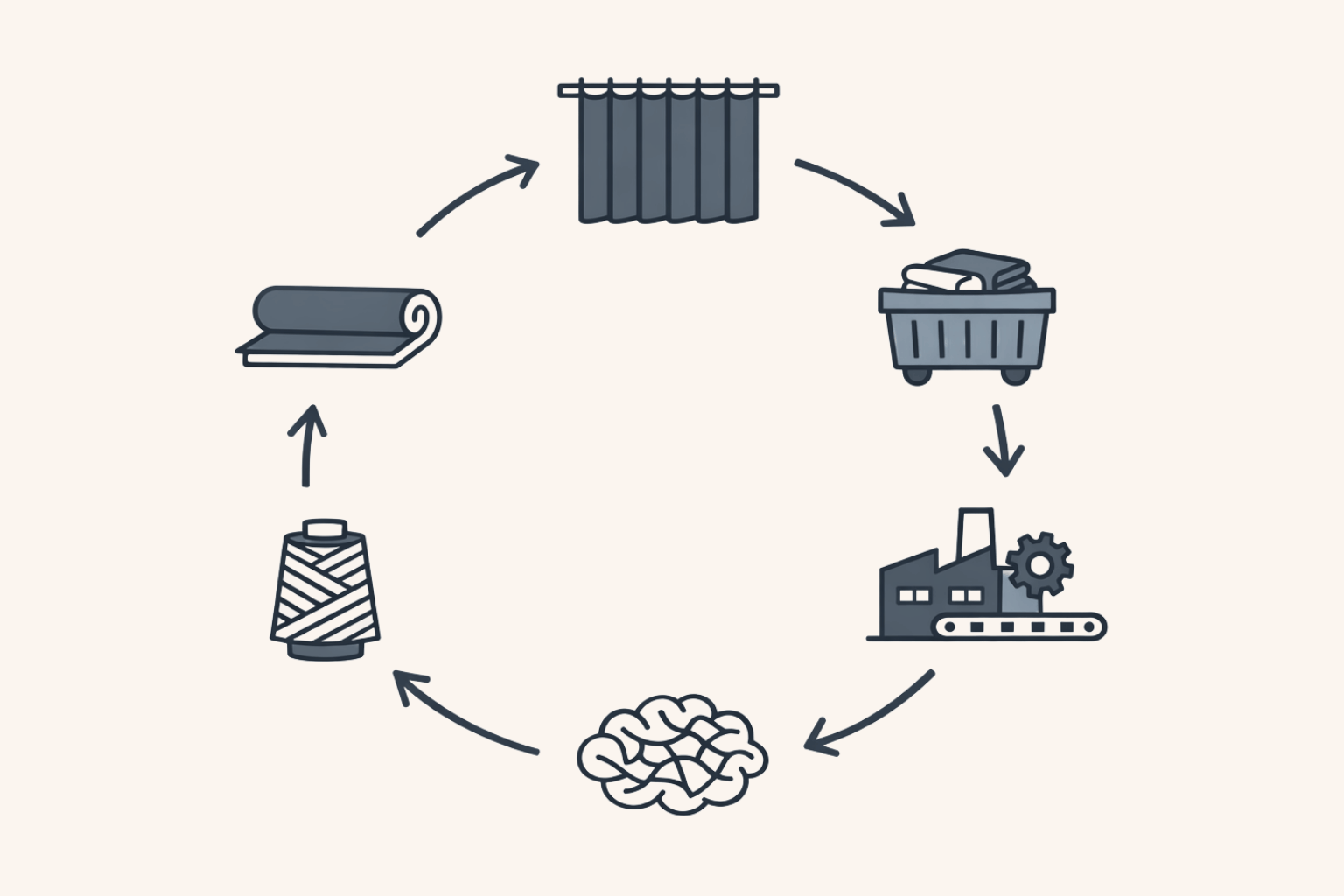
How the recovery process works
The recovery process follows a structured and traceable approach:
- Fire retardant fabrics are produced and installed in contract environments
- When their use comes to an end, they are identified for recovery
- Collection is carried out through a verified system
- Materials are prepared and mechanically recycled
- They are transformed into new raw material
In this way, the lifecycle of fabrics does not end after installation.
Recovery process of fire retardant fabrics with verified traceability
A real system that enables fabrics to be recovered, recycled and given a new life.
The role of Revivack in textile circularity
The recovery and recycling process requires an infrastructure capable of managing operations in a structured, traceable and verifiable way.
In this context, Dabedan collaborates with Revivack, a system that enables the planning, collection and verification of textile products at the end of their life cycle.
Through this platform, it is possible to define return routes, coordinate material collection and record each stage of the process with verifiable data.
This transforms circularity into an operational reality rather than a statement of intent.
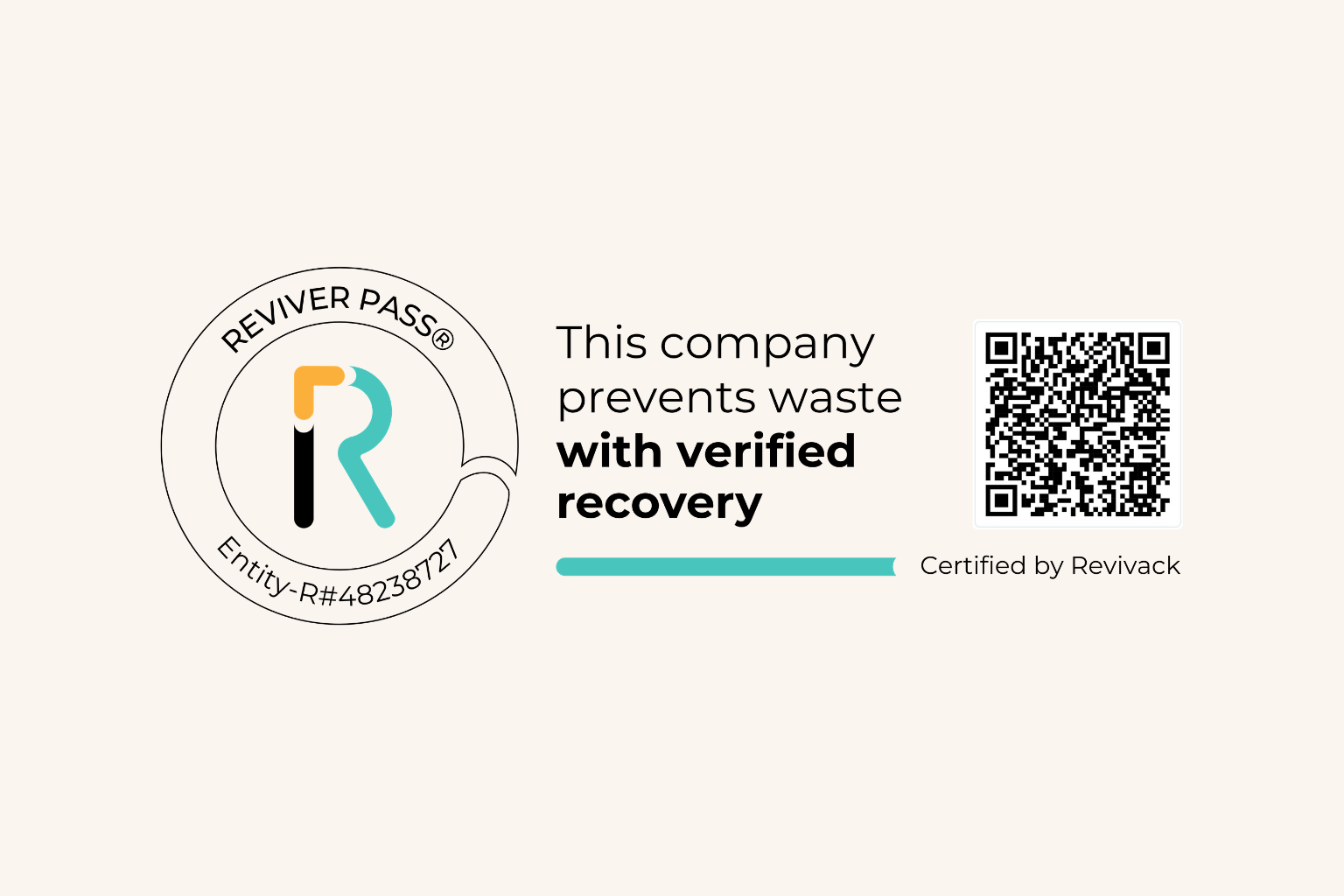
Circular Pass: proof of recovery and traceability
To ensure full transparency, products integrated into this system are associated with a Circular Pass.
This identifier allows:
- Identification of products included in the recovery system
- Access to lifecycle information
- Verification that collection and recycling processes have been carried out
In this way, circularity becomes a documented and verifiable process rather than an abstract concept.
Traceability as a competitive advantage
In a context where sustainability claims are increasingly questioned, traceability becomes essential.
A verified recovery process allows:
- Documentation of every stage
- Real evidence of material recovery
- Compliance with regulatory requirements and ESG criteria
- Greater confidence for architects, designers and specifiers
Benefits for contract and hospitality projects
Integrating circular solutions into fire retardant fabrics offers clear benefits:
- Reduction of textile waste in large-scale projects
- Alignment with sustainability strategies in hotels and public spaces
- Added value in specification and design processes
- Adaptation to an increasingly demanding regulatory environment
From fire retardant curtain fabrics to upholstery and acoustic solutions, circularity can be applied across multiple product categories.
From safety to circular responsibility
Fire retardant fabrics are designed to protect people and spaces.
Today, they can also be part of a responsible lifecycle.
From intention to circular action.
If you are developing a contract, hospitality or interior design project and would like to integrate real circular solutions into fire retardant fabrics, we can help.
Contact us to learn how to apply recovery and recycling with full traceability in your projects.
Follow us:

Subscribe to our newsletter
Receive all communications in your email to stay up to date with our news, as well as news and advice about the sector.
Latest published articles


Do you need advice?
We collaborate with you to develop custom designs tailored to the needs of each project, creating the fabric according to aesthetic, quality, or usage requirements.
Get in touch with us, and we will advise you on our products, or request a free sample.
