Passive fire protection in buildings: ensuring safety with fire-resistant materials
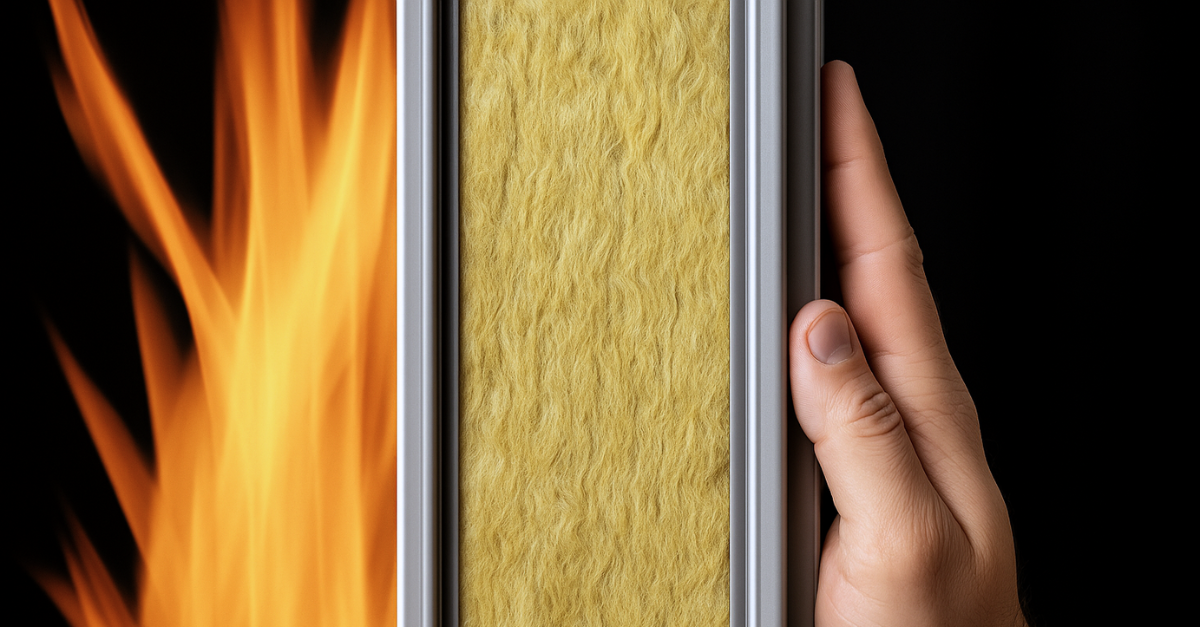
Designing safe, people-centred buildings requires more than alarms and sprinklers. The most resilient strategies weave safety directly into the fabric of the building itself, literally and figuratively. This is where passive fire protection in buildings (PFP) excels. By integrating fire-resistant materials, carefully detailed construction and compliant compartmentation, PFP measures slow ignition, reduce heat release, limit smoke and prevent the spread of fire from one area to another. While active fire protection systems such as sprinklers and fire alarms detect and actively suppress fires, passive systems work continuously in the background, preserving structural integrity and protecting escape routes in the event of a fire.
In this guide, we clarify what passive fire protection is, why it matters for contemporary design, which systems are commonly used, and how fire-resistant fabrics from Dabedan can enhance fire performance, especially in hotels, theatres, offices and other public or commercial spaces.
What is passive fire protection?
Modern projects are increasingly multifunctional, hosting dense occupancies, complex services and intricate architectural programmes. In this context, PFP delivers four essential benefits:
- Life safety: Containing both fire and smoke preserves tenable conditions along escape routes.
- Property and business continuity: Compartmentation helps localise damage, protecting assets and enabling quicker reopening after incidents.
- Compliance and assurance: Robust PFP helps demonstrate compliance with building regulations and international fire safety standards.
- Design freedom with confidence: When passive and active strategies are coordinated early, architects can pursue ambitious layouts and finishes while still achieving regulatory performance.
Why is passive fire protection important in modern building design?
Passive measures provide predictable, continuous protection in busy, multi-use buildings. They contain fire and smoke, protect escape routes and buy time for evacuation and response.
- Life safety: limits flame and smoke, keeping routes tenable.
- Structural resilience: preserves load-bearing elements for the required duration.
- Business continuity: compartmentation localises damage and shortens downtime.
- Design assurance and sustainability: supports ambitious layouts when paired with active systems and reduces post-incident waste.
Types of passive fire protection systems
While each project is unique, most successful PFP strategies combine the following passive fire protection measures and details.
Walls and partitions
Internal walls and partitions serve as the backbone of compartmentation. Properly specified, installed and detailed, they create fire-resisting boxes that slow horizontal fire spread. Key considerations include:
- Fire-resistance ratings for load-bearing and non-load-bearing partitions to maintain integrity (E), insulation (I) and, where required, load-bearing capacity (R).
- Junctions and penetrations: Any openings, such as cable trays, ducts and pipes, must be sealed with fire-stopping products matched to the substrate and penetrant type.
- Surface finishes: Wallcoverings and fabrics should carry appropriate reaction-to-fire performance (e.g. Euroclass ratings) to minimise flame spread and smoke production.
Doors and windows
Fire doors are dynamic parts of the passive system. When correctly specified, installed and maintained, they compartmentalise spaces and protect stair cores and corridors. Consider:
- Door assemblies tested as a complete set (leaf, frame, glazing, fire-resistant hardware and intumescent seals).
- Vision panels and fire-resistant glazing should match the door or screen’s rating.
- Automatic closers and hold-open devices interfaced with the fire alarm, with clear maintenance regimes.

Ceilings and floors
Floors and suspended ceilings contribute to compartmentation both vertically and horizontally:
- Floor slabs and structural decks need suitable fire resistance and detailing at service penetrations.
- Suspended ceilings can complement fire-rated floors and walls, but only where tested systems verify their role in providing protection for services or maintaining compartment lines.
- Raised floors and ceiling voids often host services: specify and maintain cavity barriers to avoid unseen fire and smoke spread.
Insulation materials
Insulation, acoustic layers and thermal linings interact with fire performance:
- Select insulation with appropriate reaction-to-fire (surface) and, where applicable, resistance ratings.
- Coordinate thermal, acoustic and fire performance so one design objective does not undermine another.
- Use compatible fire-stopping systems around insulated pipes or ducts to maintain the integrity of partitions and floors.
Benefits of using fire-resistant fabrics in public and commercial spaces
Soft furnishings and curtains influence both how a fire starts and how quickly it grows. Choosing fire-retardant fabrics, and installing them within a compliant PFP strategy, delivers tangible safety and operational benefits for client-facing environments:
- Reduced flame spread and smoke: Fabrics engineered to meet strict standards slow ignition, lower heat release and limit smoke, supporting safe evacuation and clearer wayfinding.
- Compartment protection, not compromise: In rooms designed as fire compartments, blackouts, dimouts and sheers should help maintain the intent of the passive system rather than undermine it.
- Compliance with multiple regimes: For hotels, theatres and public buildings, specifying textiles tested against relevant national and international standards (e.g. EN 13501-1 reaction to fire, BS 5852 for upholstered furniture, M1 in France, IMO for marine applications) simplifies cross-border projects.
- Acoustic and visual comfort: High-performance curtains can contribute to room acoustics (by absorbing reverberation), while blackouts sharpen AV experiences and improve guest sleep quality, without sacrificing safety.
- Durability and lifecycle value: Contract-grade fabrics, properly maintained, retain their performance and appearance in high-traffic environments, supporting brand image and operational continuity.
At Dabedan, our portfolio covers velvets, blackouts, dimouts, sheers and upholstery textiles manufactured in Barcelona and engineered for demanding public-space applications. We work closely with specifiers to ensure the right fabric is placed in the right context, aligned with compartmentation lines, escape routes and use-class requirements.
Regulations and standards for passive fire protection
A credible specification balances design intent with documented performance. While exact requirements vary by jurisdiction and building type, the following principles help design teams demonstrate compliance.
UK regulations
In the UK, passive fire measures interface with the Building Regulations (particularly Approved Document B) and relevant British/European standards. Typical considerations include:
- Reaction to fire: Surface finishes and textiles should achieve appropriate performance classifications (commonly Euroclass ratings) for their proposed location and use.
- Fire resistance: Structural elements, compartment walls and floors, and protected escape routes must meet specified fire-resistance durations and integrity/insulation criteria.
- Doorsets and hardware: Use fire-tested assemblies and maintain them; door closers and seals are critical for performance in practice.
- Detailing and installation: Performance depends on installation quality. Fire-stopping at service penetrations, junctions and cavity barriers must be selected and installed in accordance with tested systems.
- Coordination with active systems: Active and passive measures should be planned together (for example, the interface between fire alarm systems and hold-open devices on doors).
International fire safety standards
For multi-country programmes, such as hotel chains, corporate offices and cruise terminals, specifications often reference international standards to streamline approvals:
- EN 13501-1 for reaction-to-fire classification of products and building elements.
- BS 5852 for assessing the ignitability of upholstered seating composites.
- M1 (France, NF P92-507) classification frequently requested in hospitality and assembly spaces.
- IMO requirements for maritime and public-transport contexts.
When a project crosses borders, Dabedan can help map textile choices to the target classification in each country, selecting the nearest equivalents and providing the test reports your approvers expect.
How Dabedan can support your passive fire protection needs
Early collaboration is the simplest way to integrate textiles seamlessly into PFP. Here is how we typically support design teams, contractors and operators:
- Briefing and risk review
We start by understanding the building’s fire strategy: compartment lines, escape routes, occupancy loads and fire risk assessment outcomes. From there, we align fabric choices (e.g. blackout for guest rooms; dimout or sheers for public areas; upholstery for lounges) with both functional and fire-performance needs. - Standards-led specification
We reference the required classification (e.g. Euroclass reaction to fire, BS 5852 for seating) and propose compliant passive fire protection products within the textile scope, always positioning fabrics as part of a wider, layered solution that includes walls, doors, ceilings, floors and fire-stopping. - Aesthetics without compromise
Our velvets and upholstery lines balance texture, depth of colour and hand-feel with rigorous fire performance. For auditoria and theatres, high-weight curtains can also contribute to acoustic control, supporting clarity for performances and presentations. - Documentation you can build on
We provide up-to-date technical datasheets, test reports and maintenance guidance to support approvals and FM teams. This reduces friction during tendering and future audits. - Lifecycle support
From mock-ups to post-occupancy checks, we assist with care instructions, periodic inspections and replacements, helping maintain both appearance and fire-retardant performance over time.

Conclusion
Passive fire protection in buildings is the quiet constant of building safety: always on, always protecting, and most effective when baked into the design. High-performance textiles, including blackouts, dimouts, sheers, velvets and upholstery, play a decisive role in limiting flame spread, improving visibility and tenability, and supporting code compliance in public and commercial spaces. When selected and detailed in harmony with walls, partitions, doors and windows, ceilings and floors, and insulation, they strengthen the overall fire strategy while elevating aesthetics, acoustics and guest comfort.
If your next project calls for passive fire protection measures that respect brand experience as much as safety, we would love to help. Speak to Dabedan for compliant, design-forward fire-resistant fabrics made in Barcelona, supported by the documentation and expertise your approvers demand.
Follow us:

Subscribe to our newsletter
Receive all communications in your email to stay up to date with our news, as well as news and advice about the sector.
Latest published articles


Do you need advice?
We collaborate with you to develop custom designs tailored to the needs of each project, creating the fabric according to aesthetic, quality, or usage requirements.
Get in touch with us, and we will advise you on our products, or request a free sample.
