Martindale method and EN ISO 12945-2: Pilling resistance testing for fabrics

In professional textile applications, visual durability is just as important as mechanical performance or fire safety. One of the most common issues affecting the long-term appearance of fabrics is pilling: the formation of small fibre balls on the surface caused by friction during use. To evaluate and control this phenomenon, the Martindale method, defined under EN ISO 12945-2, has become the reference standard for pilling resistance testing in fabrics.
Understanding how the Martindale method works, what EN ISO 12945-2 measures and how results should be interpreted is essential for manufacturers, specifiers and buyers working with upholstery, contract and decorative textiles.
What is pilling resistance in fabrics?
Pilling resistance refers to a fabric’s ability to withstand the formation of pills on its surface when subjected to repeated rubbing or abrasion. Pills are small entangled fibre balls that remain attached to the fabric surface, negatively affecting its aesthetic quality.
In contract environments such as hotels, offices, theatres or public buildings, fabrics are exposed to continuous mechanical stress: people sitting, leaning, sliding or brushing against textile surfaces. Poor pilling resistance can quickly lead to a worn, aged appearance, even if the fabric is structurally sound.
For this reason, pilling resistance is considered a key quality indicator in professional textiles, alongside abrasion resistance, colour fastness and fire performance.
Overview of EN ISO 12945-2
EN ISO 12945-2 is the international standard that specifies a test method for determining the resistance of textile fabrics to pilling using the Martindale apparatus. Unlike general abrasion tests, this standard focuses specifically on surface appearance changes, not on fabric breakdown or mass loss.
The method simulates the mechanical actions that fabrics experience during normal use, allowing manufacturers to predict visual performance over time and ensure consistency across production batches.
The Martindale method explained
What is the Martindale method?
The Martindale method is a laboratory test that evaluates how fabrics respond to controlled, repetitive rubbing. Originally developed to assess abrasion resistance, it has been adapted under EN ISO 12945-2 to focus on pilling formation and evolution.
The method uses a specific motion pattern and defined pressure to reproduce the multi-directional friction fabrics encounter in real-life applications.
Martindale motion and abrasion mechanics
The characteristic feature of the Martindale method is its Lissajous motion, a complex figure-eight movement that ensures uniform abrasion from multiple directions. This prevents directional bias and produces highly reproducible results.
During the test, fabric specimens are rubbed against a standard abrasive surface or against themselves, depending on the test configuration. The combination of pressure, motion and cycle count accelerates the pilling process in a controlled way.
How pilling develops during fabric use
Pilling is not caused by a single factor but by a sequence of mechanisms:
- Fibre protrusion: loose fibres migrate to the fabric surface due to wear.
- Fibre entanglement: protruding fibres twist together under friction.
- Pill formation: small balls form and become anchored to the fabric.
- Pill retention or detachment: depending on fibre strength, pills either remain or break off.
Fibre type, yarn structure, fabric construction and finishing processes all influence how quickly pilling appears and how visible it becomes. Synthetic fibres, for example, tend to form more persistent pills due to their high tensile strength.
Scope and applicability of EN ISO 12945-2
EN ISO 12945-2 applies to a wide range of textile materials, including:
- Upholstery fabrics.
- Decorative and curtain fabrics.
- Technical and contract textiles.
- Blended fibre constructions.
The standard is particularly relevant for upholstery and seating fabrics, where repeated contact and friction are unavoidable. In the contract sector, pilling resistance requirements are often specified alongside abrasion performance (Martindale cycles) to ensure both functional durability and visual longevity.
Specifier checklist: What to request from a fabric supplier
| What to request from the supplier | Why it matters in contract applications |
|---|---|
| EN ISO 12945-2 pilling grade (including the inspection cycle points) | Provides a standardised benchmark to compare fabrics and predict visual durability under real-use conditions. |
| Abrasion performance (Martindale cycles) (specified separately if required by the project) | Indicates the fabric’s mechanical durability under repeated friction; it should not be confused with pilling resistance. |
| Fibre composition (percentage and type) and yarn structure | Directly influences pill formation and retention, affecting long-term surface appearance. |
| Intended end use (seating, back panels, decorative upholstery, curtains) | Performance requirements vary depending on contact level and friction exposure; defines the minimum required performance level. |
| Expected contact level and maintenance conditions (cleaning frequency, traffic intensity) | Impacts real-life performance and perception of wear, ensuring suitability for the project environment. |
Test method according to EN ISO 12945-2
Martindale equipment and test components
The test is carried out using a Martindale abrasion tester, consisting of:
- Circular specimen holders.
- Standard abradant fabrics.
- Defined weights to apply controlled pressure.
- A drive system generating the Lissajous motion.
The equipment is designed to maintain consistent test conditions across all specimens.
Fabric sample preparation
Fabric samples are cut to specific dimensions and mounted carefully to avoid pre-tension or distortion. Conditioning under controlled temperature and humidity ensures reliable and comparable results.
Multiple specimens are usually tested to account for fabric variability.
Test procedure and inspection stages
The test is performed in defined inspection intervals, expressed as a number of Martindale cycles. Common inspection stages include 125, 500, 1,000 or higher cycle counts, depending on the fabric’s intended use.
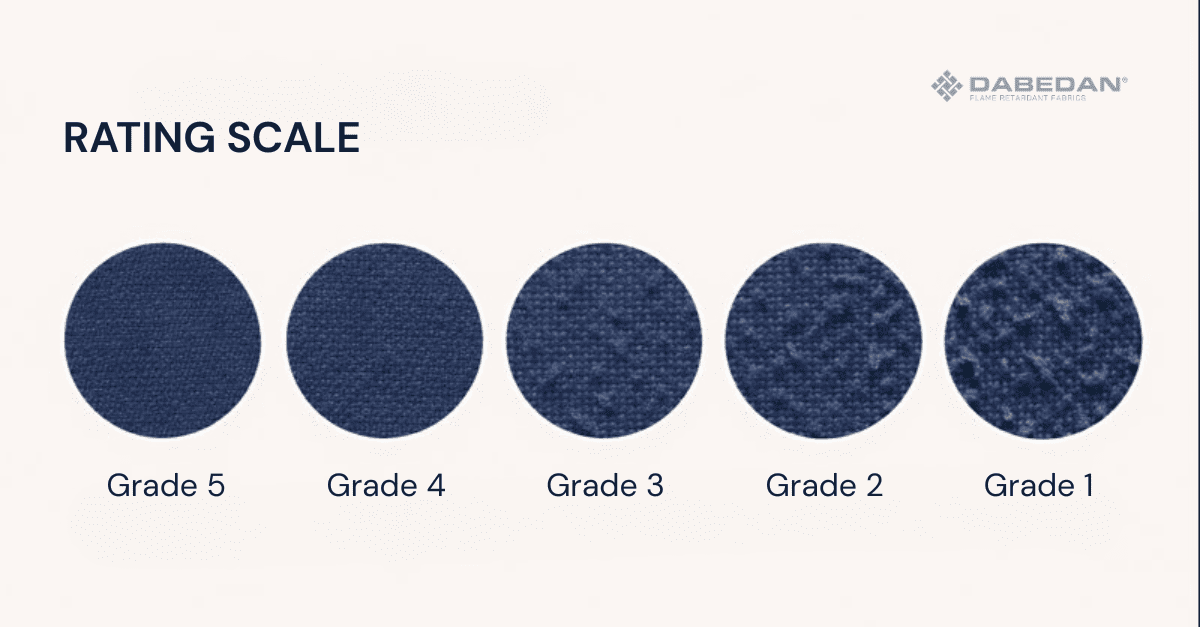
At each stage, the specimens are visually assessed and compared against standard photographic or physical references. The pilling degree is graded on a numerical scale, typically from:
- 5 – No visible pilling.
- 4 – Slight pilling.
- 3 – Moderate pilling.
- 2 – Severe pilling.
- 1 – Very severe pilling.
The final rating provides a clear indication of the fabric’s surface performance under mechanical stress.
Conclusion: the role of EN ISO 12945-2 in fabric quality control
The Martindale method under EN ISO 12945-2 plays a crucial role in quality control and product development for professional textiles. By objectively evaluating pilling resistance, manufacturers can optimise yarn selection, fabric construction and finishing processes to meet the demanding requirements of the contract sector.
For specifiers and buyers, test results according to EN ISO 12945-2 provide a transparent and comparable benchmark, supporting informed decision-making and long-term project performance. At Dabedan, pilling resistance testing is part of a broader quality strategy that ensures fabrics combine aesthetic durability, technical performance and compliance with international standards, even in high-traffic public environments
Follow us:

Subscribe to our newsletter
Receive all communications in your email to stay up to date with our news, as well as news and advice about the sector.
Latest published articles


Do you need advice?
We collaborate with you to develop custom designs tailored to the needs of each project, creating the fabric according to aesthetic, quality, or usage requirements.
Get in touch with us, and we will advise you on our products, or request a free sample.
