How to remove mould from fabric?
How to remove mould from fabric?
Mould on fabric is not only unsightly but can also compromise the integrity of the material and pose potential health risks. Whether it’s a beloved garment or household textiles, dealing with mould requires a careful approach to ensure proper removal and prevention. In this guide, we’ll explore how to remove mould from fabric effectively, prevent further damage, and maintain the long-term condition of your textiles.
Identifying mould on fabrics
Signs of mould growth
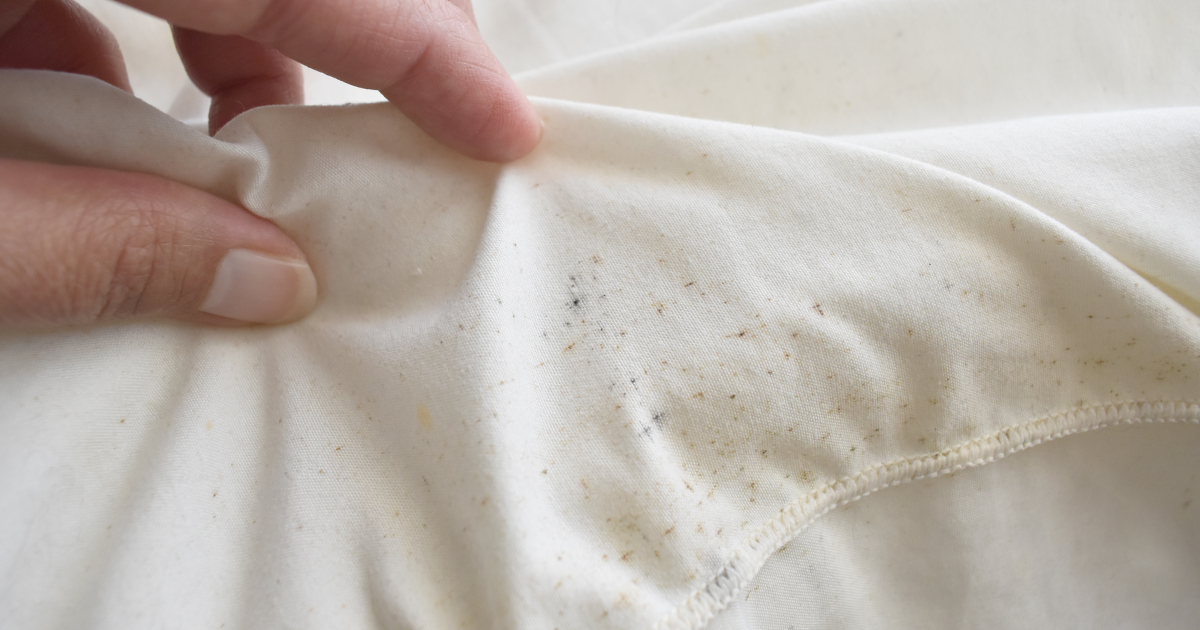
The sooner you identify mould on fabric, the better the chance of effectively removing it. Common signs of mould growth on textiles include:
- Dark spots or patches: Mould tends to appear as irregularly shaped dark patches in colours like green, black, or grey.
- Musty odour: The unmistakable musty smell is one of the earliest indicators of mould growth. It often lingers on fabrics and in the surrounding air.
- Weakened fibres: Over time, mould can break down the fibres of the fabric, leading to thinning, tears, or holes.
Once you notice these symptoms, it is essential to act quickly to limit the damage and prevent further spread of mould spores.
Steps to remove mould from fabric
Step 1: Prepare your materials
Having the right tools and cleaning agents on hand ensures the most efficient and effective removal process. Here’s what you’ll need:
- Hot water: Hot water is critical for killing mould spores during the washing process.
- White vinegar: A natural disinfectant, white vinegar is effective in combating mould.
- Hydrogen peroxide: Known for its ability to treat tough stains, hydrogen peroxide also serves as a sanitiser.
- Baking soda: A powerful deodoriser, baking soda also helps lift stains.
- Stain remover: Choose a stain remover that specifically targets mould stains.
- Toothbrush: A soft-bristled toothbrush is ideal for gently scrubbing the fabric without causing damage.
- Washing machine: Use your washing machine for a thorough cleaning cycle.
It is also crucial to work in a well-ventilated area to avoid inhaling mould spores, which can be harmful.
Step 2: Pre-treat the affected area
Proper pre-treatment can make the cleaning process smoother and more effective. Follow these steps to prepare the fabric for washing:
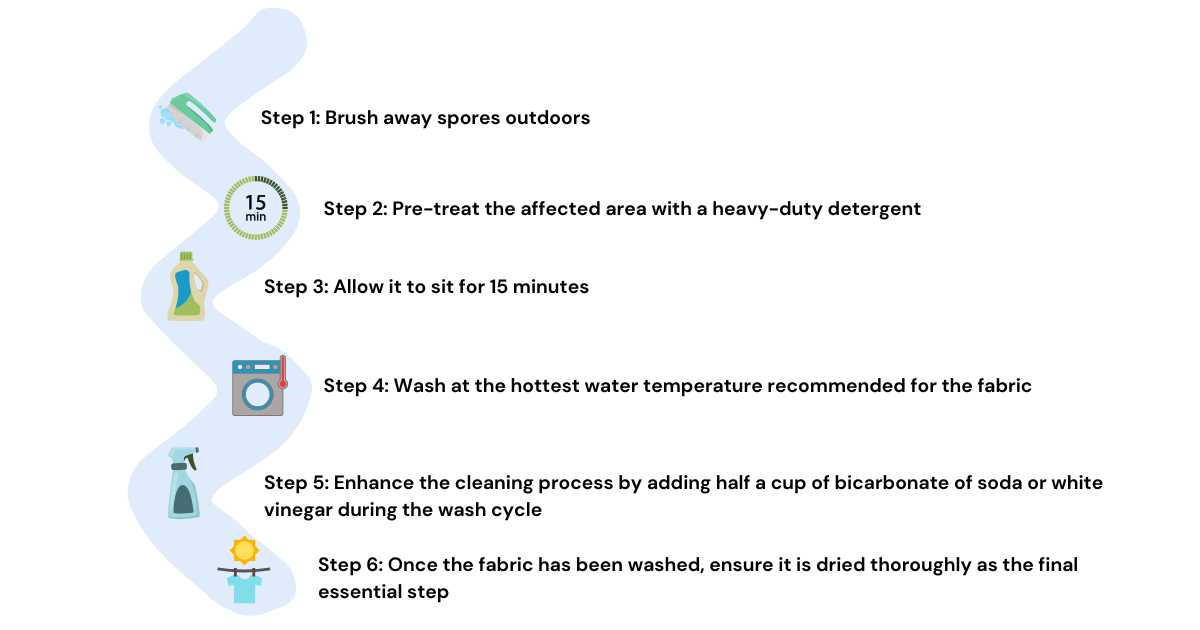
- Brush off loose mould: Take a soft toothbrush and gently brush off any surface mould. Be sure to do this outdoors to avoid spreading spores indoors.
- Spot test: Before applying any cleaning solution, test it on a small, inconspicuous area of the fabric to ensure that it won’t cause any damage or discolouration.
- Pre-soak the fabric: In a bucket, mix equal parts of white vinegar and water. Submerge the fabric in this solution and allow it to soak for at least 30 minutes to loosen the mould stains.
- Apply hydrogen peroxide (if needed): For stubborn stains, apply hydrogen peroxide directly to the affected area and let it sit for 10-15 minutes. This will help to break down the mould and stain.
Step 3: Wash and dry the fabric
Once the fabric has been pre-treated, it’s time to wash and dry it. Follow these steps for the best results:
- Set the washing machine: Select a hot water cycle. High temperatures are effective in killing mould spores, so ensure the fabric’s care label allows for hot water washing.
- Add cleaning agents: To enhance the cleaning power, add half a cup of baking soda or white vinegar during the washing cycle.
- Dry thoroughly: After washing, the next crucial step is drying the fabric. If possible, dry the fabric outdoors in direct sunlight. The UV rays from the sun will help kill any lingering spores. If using a dryer, ensure that the fabric is completely dry before storing it away.
If the fabric still shows signs of mould after the first wash, repeat the process. However, be careful not to over-treat delicate fabrics, as this could weaken the material over time.
Can mould permanently damage fabric?
Yes, if left untreated, mould can cause permanent damage to fabrics. The longer the mould has been allowed to grow, the more difficult it becomes to remove it completely. Mould can break down the fibres of the fabric, causing stains, weakening the material, and in some cases, leading to holes or tears. While it’s often possible to remove the stains, acting quickly is crucial to preserving the fabric’s integrity. The sooner you address the issue, the better your chances of saving the item.
Preventing mould growth in the future
Store fabrics properly
Preventing mould from returning is just as important as removing it. Proper storage of your fabrics can significantly reduce the risk of mould growth:
- Keep fabrics in a dry environment: Never store clothing or textiles in damp, humid areas such as basements or closets that lack proper ventilation. Mould thrives in moisture-rich environments.
- Use breathable storage bags: Rather than using plastic containers, which trap moisture, opt for fabric or mesh bags. These allow air circulation, preventing the build-up of humidity.
Control humidity levels
One of the most effective ways to prevent mould is to control the humidity levels:
- Maintain a well-ventilated space: Ensure that your home has adequate airflow, especially in areas like bathrooms and laundry rooms, where humidity tends to be higher.
- Use a dehumidifier: In areas prone to excess moisture, such as basements or damp rooms, using a dehumidifier can significantly reduce humidity levels, thus preventing mould growth.
- Dry fabrics immediately: Don’t leave wet textiles in the laundry basket for prolonged periods. Always dry them promptly to prevent mould spores from developing.
Additional tips
- Regularly inspect stored fabrics for any signs of mould growth. Early detection can help prevent more significant issues.
- Incorporate mould-resistant products, such as silica gel packs or activated charcoal, into your storage areas to absorb moisture and keep fabrics dry.
- Wash any fabrics exposed to humid conditions as soon as possible, especially if you live in an area with high humidity or frequent rainfall. Prompt washing will reduce the risk of mould growth.
By following these steps and tips, you can successfully remove mould from fabric and preserve the quality of your textiles. Remember, the key to preventing mould is to keep your fabrics clean, dry, and well-ventilated. Regular maintenance and early intervention are crucial to tackling mould problems before they escalate, ensuring your textiles remain in excellent condition for years to come.
Follow us:

Subscribe to our newsletter
Receive all communications in your email to stay up to date with our news, as well as news and advice about the sector.
Latest published articles


Do you need advice?
We collaborate with you to develop custom designs tailored to the needs of each project, creating the fabric according to aesthetic, quality, or usage requirements.
Get in touch with us, and we will advise you on our products, or request a free sample.
