How to choose the right fireproof fabric for your business needs
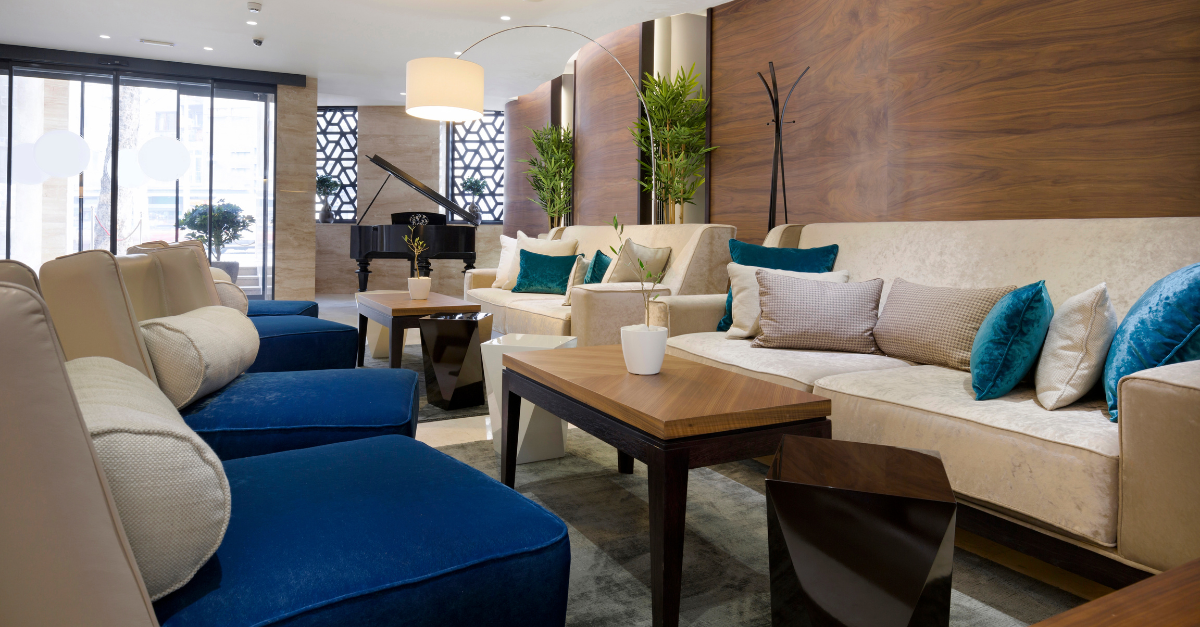
Choosing the right fireproof fabric can significantly enhance the safety and functionality of your business space—without compromising on aesthetics. At Dabedan, we combine advanced textile technology with high design standards to deliver flame-retardant materials that meet strict regulatory requirements and perform reliably in demanding environments. In this guide, we’ll explore what qualifies a fabric as “fireproof,” which industries depend on these textiles, and how to select the most suitable option for your specific application. You’ll also discover how Dabedan’s certified fireproof fabrics offer the performance, durability, and visual appeal your project demands.
What makes a fabric fireproof?
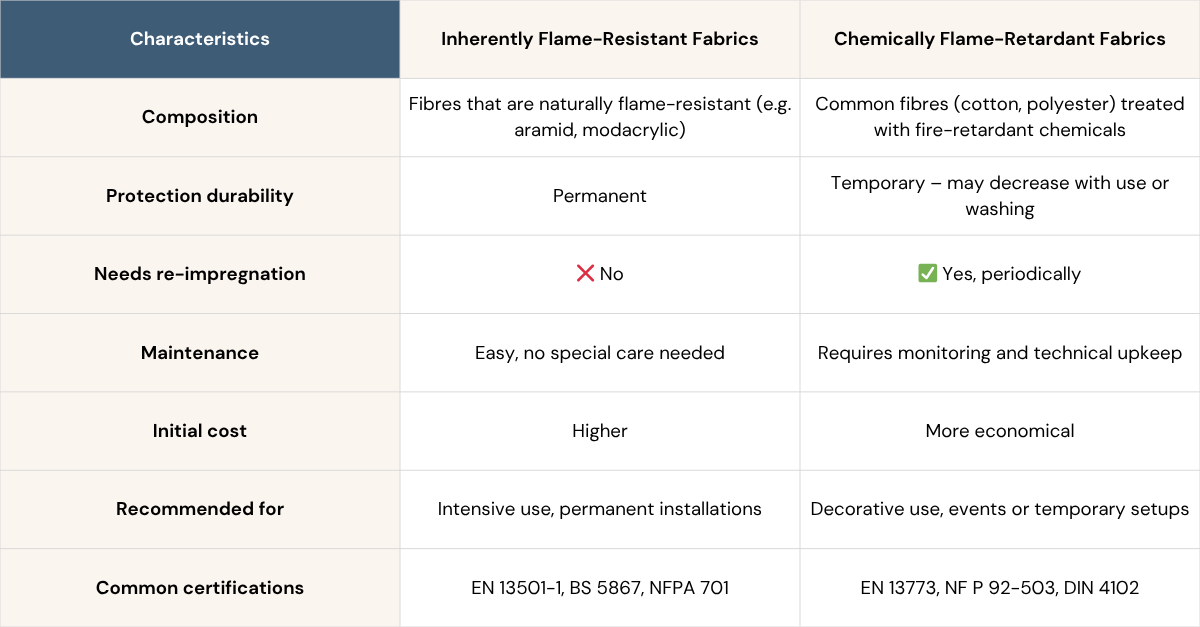
“Fireproof” fabrics—more accurately referred to as flame-resistant or flame-retardant—are engineered to resist ignition and slow the spread of flames. This is achieved either through inherently flame-resistant fibres or chemical treatments that alter the fabric’s behaviour under heat. Inherently fire-resistant fibres such as aramid, modacrylic, or specific polyesters resist combustion due to their molecular structure. Treated fabrics, on the other hand, are coated with flame-retardant chemicals that enable them to char and self-extinguish instead of igniting.
No fabric is completely fireproof in absolute terms. Instead, fireproof textiles delay ignition and flame spread, buying crucial time during emergencies. Their primary function is to minimise risk and enhance occupant safety. When selecting these fabrics, it’s essential to understand their composition, behaviour under heat, and whether they meet the necessary safety certifications.
Fire behaviour is also influenced by fabric construction and weight. Tighter weaves and heavier GSM (grams per square metre) often improve resistance, although they may impact breathability or drape. Dabedan’s technical team evaluates these variables to help clients make the best material choice.

Common industries that require fireproof textiles
Many sectors are required to use fireproof textiles to protect people and property:
- Hospitality and entertainment: Hotels, restaurants, theatres and event venues must use certified flame-retardant fabrics for curtains, upholstery, and decor. For instance, a luxury hotel might install velvet curtains that not only provide thermal insulation and sound control but also meet EN 13773 standards.
- Public buildings and institutions: Schools, hospitals, museums, and government offices use fireproof textiles for partitions, wall coverings, and seating. A hospital might use antibacterial fire-retardant cubicle curtains to ensure both safety and hygiene.
- Industrial and energy sectors: Fire-resistant uniforms, divider curtains and equipment covers are essential in high-risk environments. A chemical plant, for example, may require aramid-based textiles for worker uniforms and flexible wall partitions.
- Events and exhibitions: Flame-retardant banners, drapes, and panels are used in venues where temporary setups are common. Exhibition booths constructed with untreated fabrics are usually prohibited in international trade fairs.
- Transportation: Fire-retardant fabrics are required for upholstery, curtains, and carpets in airplanes, trains, and ships. These fabrics must pass tests such as FAR 25.853 for aircraft interiors.
In each of these industries, the use of certified fireproof textiles helps ensure the safety of both the public and employees while maintaining compliance with national and international fire regulations.
Difference between fire-resistant and fire-retardant fabrics
- Fire-resistant fabrics are made from fibres that are inherently non-flammable. This resistance is part of their chemical structure and does not wash out.
- Fire-retardant fabrics are treated with chemicals to inhibit ignition. These treatments can diminish with washing or prolonged use.
Understanding the difference helps inform both product choice and maintenance planning. Fire-resistant fabrics offer long-term protection, whereas fire-retardant fabrics may require periodic testing or retreatment, especially after heavy use or repeated washing.
Key factors to consider when selecting fireproof fabric
Level of fire resistance required (standards and tests)
Fire codes and application types determine which standards apply. Common tests include:
- EN 13773 (EU curtains)
- BS 5867 Part 2 (UK)
- NFPA 701 (USA)
- DIN 4102 B1, NF P 92-503 M1, CAL TB117
Each standard tests for parameters such as flame spread rate, after-flame time, and char length. Always ensure the fabric meets the relevant certifications. Request documentation and verify whether the fabric has been tested by accredited laboratories. The level of fire resistance required will also depend on whether the application is for permanent or temporary installations.
Material type: natural vs synthetic fibres
- Natural fibres like cotton or linen usually require treatment; wool is naturally more resistant.
- Synthetic fibres like polyester or aramid may be inherently flame-retardant and offer excellent durability.
Choose based on aesthetics, durability, and certification needs. Synthetic fabrics generally perform better under high heat and are less likely to require re-treatment, making them suitable for long-term or heavy-use environments. A blend of cotton and modacrylic, for example, can combine the softness of natural fibres with the resilience of synthetics.
Durability, washability, and maintenance
Frequent cleaning requires fabrics that retain flame resistance. Look for DFR (durably flame-retardant) labels. Inherently fire-resistant materials maintain performance over time, unlike chemically treated ones that may require re-treatment. Evaluate how the fabric behaves after cleaning and whether it supports standard maintenance protocols. For example, curtains in hotel rooms must remain safe after multiple dry-cleaning cycles.
Also consider the level of abrasion resistance if the fabric is used on seating or in high-traffic environments. A high Martindale or Wyzenbeek score is often a good indicator of a durable textile that will remain structurally sound while retaining its flame-retardant properties.
Breathability and comfort for end-users
For uniforms, seating, or public areas, breathable and comfortable fabrics are essential. Ensure materials are certified safe (e.g. OEKO-TEX 100) and pleasant to the touch. This is especially important in settings like theatres, healthcare facilities, or educational institutions where people spend extended periods near these textiles. The weight, finish, and feel of the fabric will contribute to thermal comfort and acoustic absorption, which can also enhance the user experience. Dabedan offers velvet, sheers, and acoustic fabrics that combine these attributes.
Common mistakes to avoid
- Assuming all fire-retardant fabrics are permanent solutions.
- Ignoring maintenance guidelines or certification expiration.
- Choosing unverified suppliers without proper documentation.
- Using untreated textiles in public spaces subject to inspection.
- Failing to specify the correct classification for the application (e.g. M1 vs M2, or B-s1,d0 vs B-s3,d2).
Avoiding these pitfalls ensures compliance and reduces liability.
How to verify fireproof fabric compliance and certification
Understanding labels and test reports
Check that products display valid certifications (e.g., EN 13501-1, BS 5867). Request test reports from accredited labs. These reports should detail the test methods used, the conditions under which the fabric was tested, and the outcomes achieved. Documentation should be up to date and linked to specific production batches whenever possible. Look for symbols or phrases such as “complies with NFPA 701” or “M1-rated” in European contexts.
Working with accredited suppliers
Partner with manufacturers who provide full compliance documentation and testing support. Dabedan ensures each fabric batch is certified and quality-checked. A good supplier should be transparent about their processes and be able to provide information regarding production traceability, environmental standards, and ongoing quality control.
Working with experienced partners also offers guidance in navigating complex fire safety codes, helping ensure your project is fully compliant from the start. Dabedan works closely with interior designers, architects and specifiers to support compliance at every stage of the project.
Why choose Dabedan’s fireproof fabrics for your business?
- Over 40 years of expertise in flame-retardant textiles
- Fully certified to international safety standards
- Wide range of finishes: blackout, sheer, velvet, acoustic, antibacterial, sustainable
- Custom design options to match your project vision
- Manufactured in Barcelona with strict quality control
- Compliant with EU and UK regulations, as well as NFPA and other global standards
- Continuous R&D innovation to meet evolving fire safety challenges
Our catalogue includes over 1,200 references, covering everything from contract upholstery to decorative sheers and blackout solutions for hospitality, public buildings and cultural venues. Dabedan’s R&D team is also equipped to help clients develop tailor-made solutions based on the technical and aesthetic needs of their project.
Ready to elevate your space with safety and style?
Contact us to explore our fireproof fabric solutions tailored to your industry. Whether for hospitality, industrial, or public use, Dabedan offers certified, durable and visually striking materials designed to perform. Request samples or speak with our technical team to get expert guidance on choosing the ideal fireproof textile for your space.
Follow us:

Subscribe to our newsletter
Receive all communications in your email to stay up to date with our news, as well as news and advice about the sector.
Latest published articles


Do you need advice?
We collaborate with you to develop custom designs tailored to the needs of each project, creating the fabric according to aesthetic, quality, or usage requirements.
Get in touch with us, and we will advise you on our products, or request a free sample.
