EN ISO 105-B02:2014: Assessing colour fastness to light (light fastness in fabrics)

Colour fastness is a critical performance factor in textile manufacturing, especially in contract, hospitality and public-space applications, where fabrics are exposed to continuous light sources. Among all colour fastness properties, light fastness plays a decisive role in ensuring long-term aesthetic quality and functional durability.
The EN ISO 105-B02:2014 standard is the internationally recognised method for assessing colour fastness to light in fabrics, providing a reliable benchmark to evaluate how textiles react when exposed to artificial daylight over a defined period of time. Understanding this standard is essential for manufacturers, specifiers and buyers who demand consistent quality and compliance in professional textile projects.
What is EN ISO 105-B02:2014?
EN ISO 105-B02:2014 is a test standard that defines the method for determining the resistance of textile colours to light exposure. The test simulates natural daylight using controlled artificial light sources, allowing laboratories to measure how dyes and pigments behave when exposed to prolonged illumination.
This standard applies to all types of coloured textile materials, including woven, knitted and nonwoven fabrics, regardless of fibre composition or end use. In the contract and upholstery sectors, it is widely used to validate fabrics intended for environments with high light exposure such as hotels, offices, theatres and public buildings.
The role of colour fastness in product quality
Colour fastness directly reflects product quality and durability. Poor colour fastness can lead to premature fading, visual inconsistency and customer dissatisfaction, even if the fabric performs well mechanically or meets fire safety requirements.
In B2B textile projects, colour stability is not optional. Architects, interior designers and facility managers expect fabrics to maintain their appearance throughout their service life. Colour fastness testing ensures that chemical bonds between fibres and dyes are sufficiently stable to resist environmental stresses.
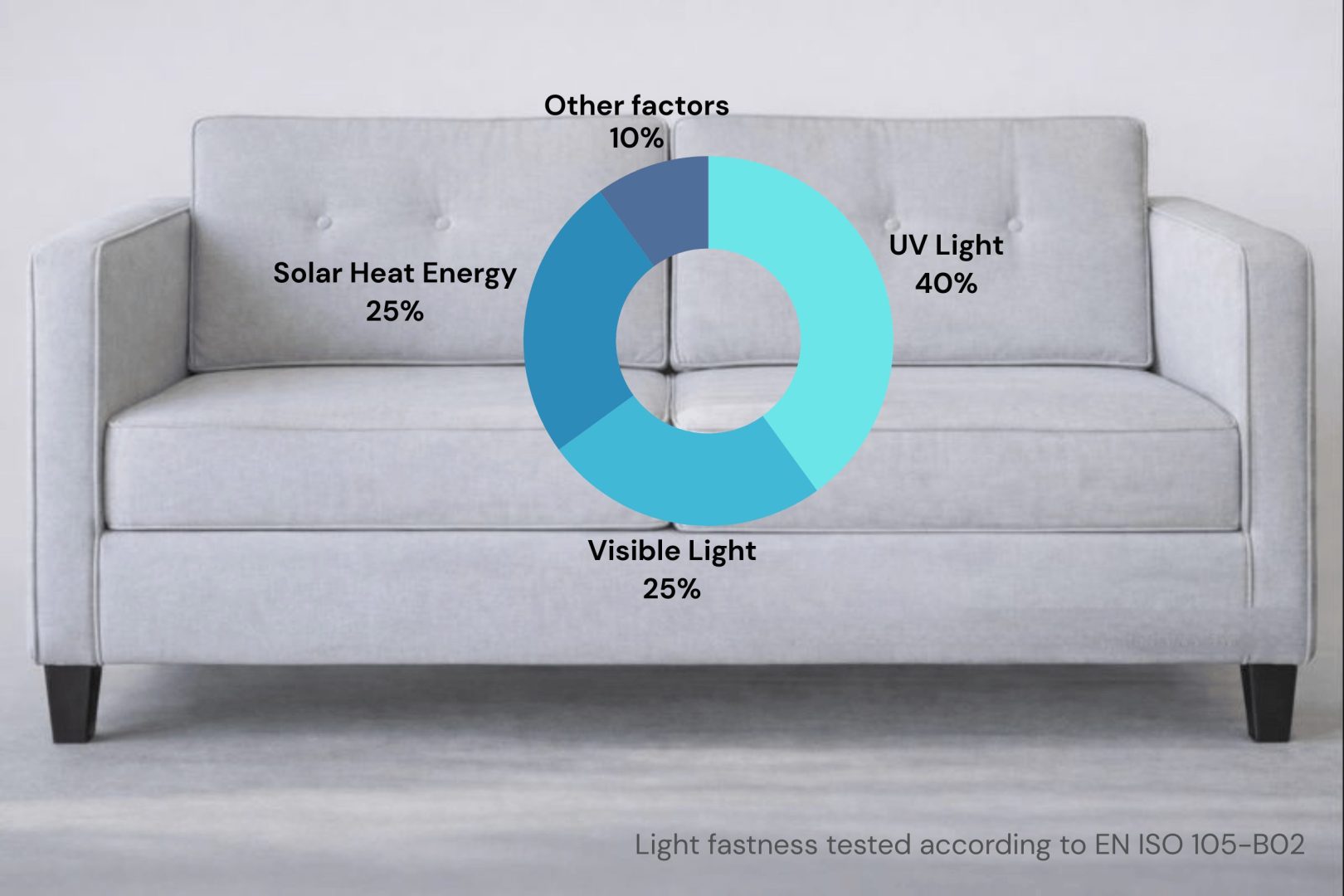
Light fastness as part of colour fastness
Light fastness is one of the most demanding colour fastness properties. Unlike washing or rubbing, light exposure is continuous, cumulative and unavoidable, especially in spaces with natural daylight or artificial lighting systems operating for extended hours.
Why light fastness is critical for coloured materials?
Effects of UV and visible light
Ultraviolet and high-energy visible light break down dye molecules through photochemical reactions. Over time, this leads to colour loss and tone shifts that cannot be reversed.
Fading, discolouration and degradation risks
Insufficient light fastness results in uneven fading, yellowing or greying, particularly noticeable on large textile surfaces such as curtains or upholstery panels.
Typical use cases
Light fastness is crucial not only for textiles but also for coatings, prints and plastics. In fabrics, it is especially relevant for upholstery fabrics, sheers, velvets and decorative technical textiles used in public environments.
Light fastness requirements for fabrics
Light fastness requirements vary depending on the application. Decorative fabrics used in low-light environments may tolerate lower ratings, while contract and hospitality textiles must meet stricter performance thresholds due to continuous exposure.
Fabric light fastness scale
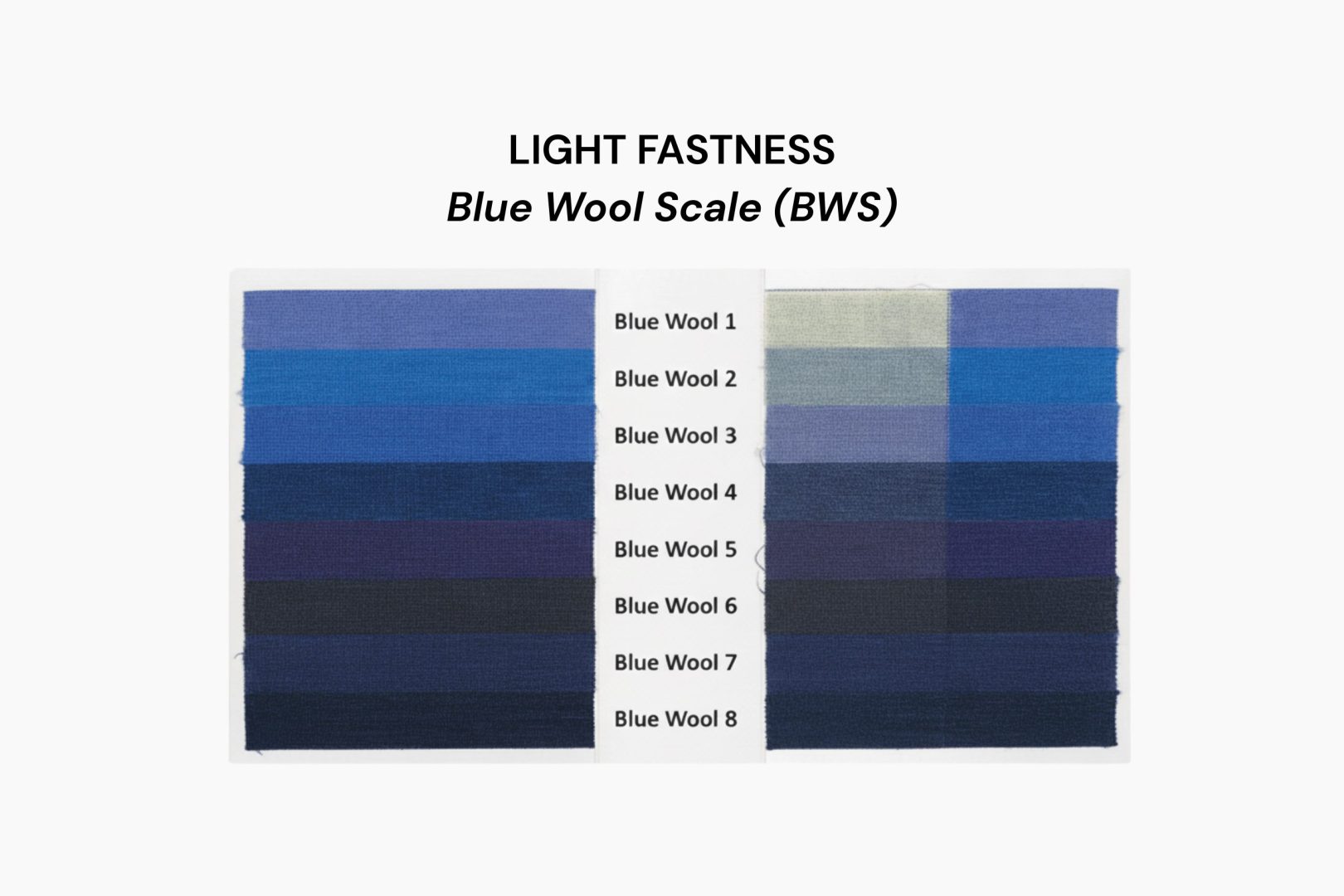
Light fastness results are evaluated using the blue wool scale, which ranges from 1 (very poor) to 8 (excellent). Each level represents a known reference material with increasing resistance to fading.
- Grades 1–2: Unsuitable for professional use.
- Grades 3–4: Limited durability, acceptable only for low exposure.
- Grades 5–6: Suitable for most contract applications.
- Grades 7–8: Excellent light fastness for demanding environments.
For upholstery and curtain fabrics used in public spaces, ratings of 5 or higher are generally expected.
Test method according to EN ISO 105-B02:2014
The test method defined in EN ISO 105-B02:2014 involves exposing fabric specimens to a controlled light source for a specified period, alongside blue wool reference standards.
Test equipment and light sources
Xenon arc lamp
The standard specifies the use of a xenon arc lamp, which closely replicates the spectral distribution of natural daylight, including ultraviolet radiation.
Simulation of natural daylight
Filters are applied to ensure accurate simulation of sunlight conditions, making the test results representative of real-life exposure.
Control of temperature and humidity
Environmental conditions such as temperature and humidity are carefully controlled, as they influence photochemical degradation and test reproducibility.
Evaluation and interpretation of results
Assessing colour change in fabrics after light exposure
After exposure, the fabric sample is visually compared against the blue wool references. The level at which noticeable fading occurs determines the final light fastness rating.
This assessment requires trained personnel, as visual perception and consistency are critical for accurate grading.
Light fastness ratings and their meaning for fabrics
A higher rating indicates greater resistance to fading and longer aesthetic durability. For B2B buyers, these results provide a quantifiable quality benchmark, supporting informed material selection and specification decisions.
At Dabedan, light fastness testing is integrated into the quality validation process for technical and decorative flame-retardant fabrics, ensuring that safety, performance and visual integrity coexist over time. The EN ISO 105-B02:2014 standard plays a key role in guaranteeing that fabrics not only meet fire regulations but also retain their colour performance throughout their lifecycle.
Follow us:

Subscribe to our newsletter
Receive all communications in your email to stay up to date with our news, as well as news and advice about the sector.
Latest published articles


Do you need advice?
We collaborate with you to develop custom designs tailored to the needs of each project, creating the fabric according to aesthetic, quality, or usage requirements.
Get in touch with us, and we will advise you on our products, or request a free sample.
