BS476: British Standard for Fire-Resistant Materials
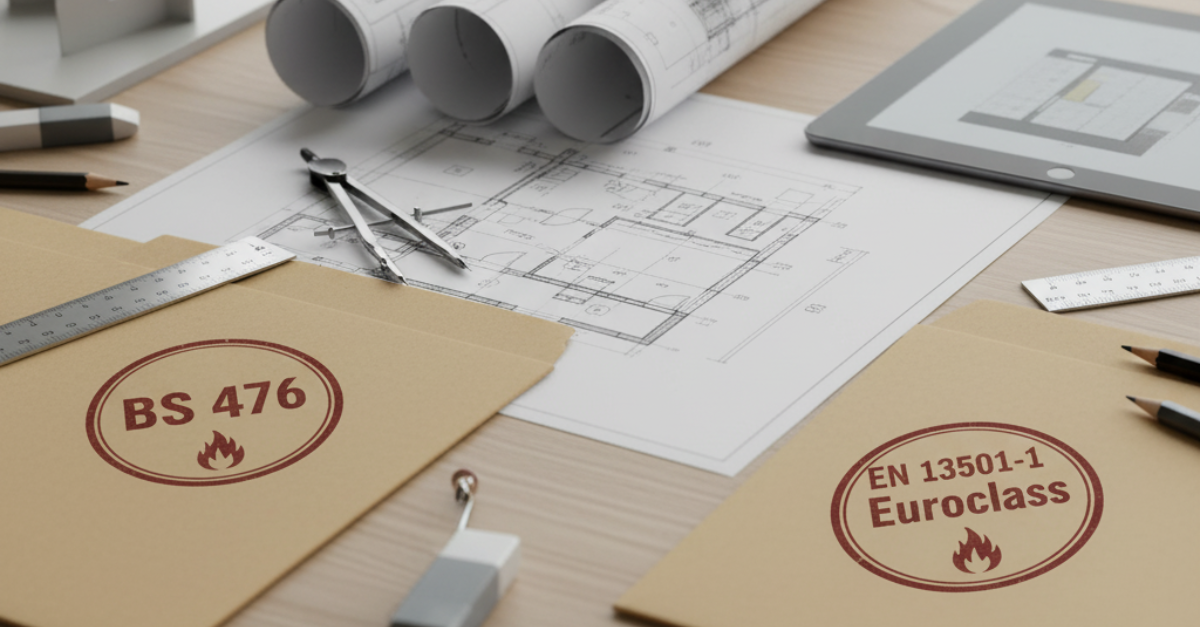
Introduction to BS476: the British standard for fire-resistant materials
BS 476 (often written BS476) is a long-standing British Standard that sets out test methods for assessing fire-resistant materials and building components. Within the UK context of fire classification, BS 476 historically addressed two critical behaviours: fire propagation and surface spread of flame, alongside methods for fire resistance of building elements. While today many projects also reference European classifications, BS 476 remains familiar language in specifications, contractor submittals and legacy building documentation.
What is BS476 and why is it important?
At its core, BS 476 provides laboratory methods to understand how a product behaves in the event of a fire: how readily flames spread on its surface, how much heat it contributes, and how long an element retains load-bearing capacity and integrity. Designers, clients and authorities use these results to set minimum fire ratings, differentiate between fire categories in the UK market and select appropriate materials for each space.
Why BS476 certification matters in fire safety
- Life safety and evacuation: Limiting spread of flame helps keep escape routes tenable for longer, supporting safe egress and firefighting operations.
- Predictable performance: Standardised tests enable apples-to-apples comparison across suppliers, improving fire safety compliance and procurement clarity.
- Risk management and insurance: Demonstrable performance against BS 476 can support risk assessments, maintenance strategies and stakeholder assurance.
- Interoperability with other regimes: Many global brands operate in multiple jurisdictions. BS 476 data helps cross-reference to European reaction-to-fire classifications and other sector standards when needed.

Types of fire-resistant materials covered by BS476
BS 476 applies to a wide array of construction products used in passive fire protection, from wall linings and ceilings to doors, ducts and service enclosures. In practice, specifiers most often encounter it when considering internal finishes, fire-resistant materials for partitions and fire-resisting building elements.
Fire-resistant fabrics and their applications
Textiles are central to the look and function of hotels, theatres, education and workplace projects. For these public-space environments, fabrics should contribute minimally to flame spread and smoke development while meeting the acoustic and blackout needs of the room.
- Curtains and drapery: Blackouts, dimouts and sheers influence both ignition and growth phases. Products described as fire-retardant or fire-resistant fabric should be supported by test evidence aligned to the project’s compliance pathway (e.g. BS 476 results and, where applicable, EN reaction-to-fire classification).
- Stage and auditorium use: High-mass velvets and acoustic drapes can improve reverberation control. The specification should balance fire classification (UK) requirements with visual and acoustic targets.
- Upholstery and wall panels: For seating and padded linings, coordinate textile performance with substrate and composite tests referenced in the project brief.
Fire-resistant insulation materials and their role
Insulation and thermal/acoustic linings interact with fire performance in multiple ways:
- External walls and internal partitions: Select insulation that supports the intended fire rating and does not undermine the compartment line.
- Services and penetrations: Ensure compatible fire-stopping around insulated pipes, ducts and cable trays so BS 476-rated partitions retain their integrity.
- Whole-system view: Consider how adhesives, backings and fixings behave under heat, not just the facing material.

BS476 vs. other fire safety standards
Even in UK projects, BS 476 often sits alongside European or sector-specific standards. Understanding the relationship helps teams write precise, future-proof specifications.
- Reaction-to-fire (EN system): Many new builds reference EN 13501-1 Euroclasses (A1–F with s/d smoke and droplets). Where fire classifications (UK) are expressed in BS 476 terms, provide a clear mapping to the EN system to avoid ambiguity.
- Upholstery (furniture): Seating composites are commonly evaluated with BS 5852 ignition sources. This focuses on finished furniture behaviour rather than a single fabric layer.
- Maritime (IMO): Ship and ferry interiors typically follow the IMO FTP Code, which is a different regime from both BS and EN.
- North American tests: Some international clients may cite ASTM/UL methods; treat these as separate and do not assume equivalence without a qualified correlation.
Construction industry
Contractors and fabricators benefit from unambiguous wording. Where legacy drawings state “Class 1 spread of flame to BS 476”, confirm the exact part and performance level, and verify whether the authority accepts an EN reaction-to-fire classification as an alternative. Keep submittals consistent: test lab, report number, date, substrate, mounting and any post-treatments.
Building regulations and fire safety compliance
In England and Wales, Approved Document B guides how test evidence supports compliance. Scotland and Northern Ireland have parallel frameworks. A robust specification clearly identifies where BS 476 data is required, where an EN Euroclass is preferred and how fire-resistant materials will be installed and maintained to preserve tested performance.
How Dabedan ensures BS476 compliance for public and private buildings
Dabedan manufactures and sources contract-grade textiles manufactured in Barcelona with safety and design at the core. We collaborate with architects, designers and contractors to ensure that fire-resistant materials are integrated coherently into the project’s passive strategy.
- Briefing and alignment
We review the fire strategy, compartmentation lines and room data sheets to match each space with the right fabric family: blackouts for guest rooms and AV spaces; dimouts and sheers for public zones; velvets and upholstery for lounges and auditoria. - Standards-led product selection
We propose textiles supported by current test evidence relevant to the UK market, including BS 476 spread-of-flame/propagation data where required and EN reaction-to-fire classifications for broader European comparability. Where the brief uses BS 476 language, we help translate requirements into precise, testable criteria. - Documentation and approvals
We supply technical datasheets, test reports and maintenance guidance that align with contractor submittal workflows and client O&M needs. This speeds approvals and supports future audits. - Installation and interfaces
Performance depends on detailing. We advise on track placement, clearances to fire doors, vents and luminaires, and on avoiding conflicts with active fire protection (e.g. sprinkler throw patterns and detector sightlines). - Care and lifecycle
We provide care instructions that maintain fire-retardant properties where applicable and support periodic inspections so textiles continue to perform throughout their service life.
Conclusion
BS 476 remains an important reference point for fire classification in the UK, especially on legacy buildings and projects that still specify spread-of-flame classes. Used alongside modern EN classifications, it provides a clear, test-based picture of how materials are likely to behave in the event of a fire. With Dabedan as your partner, you can specify fire-resistant fabrics that meet aesthetic goals and documented safety requirements, backed by the evidence your approvers expect.
Follow us:

Subscribe to our newsletter
Receive all communications in your email to stay up to date with our news, as well as news and advice about the sector.
Latest published articles


Do you need advice?
We collaborate with you to develop custom designs tailored to the needs of each project, creating the fabric according to aesthetic, quality, or usage requirements.
Get in touch with us, and we will advise you on our products, or request a free sample.
