What are hydrophobic substances?
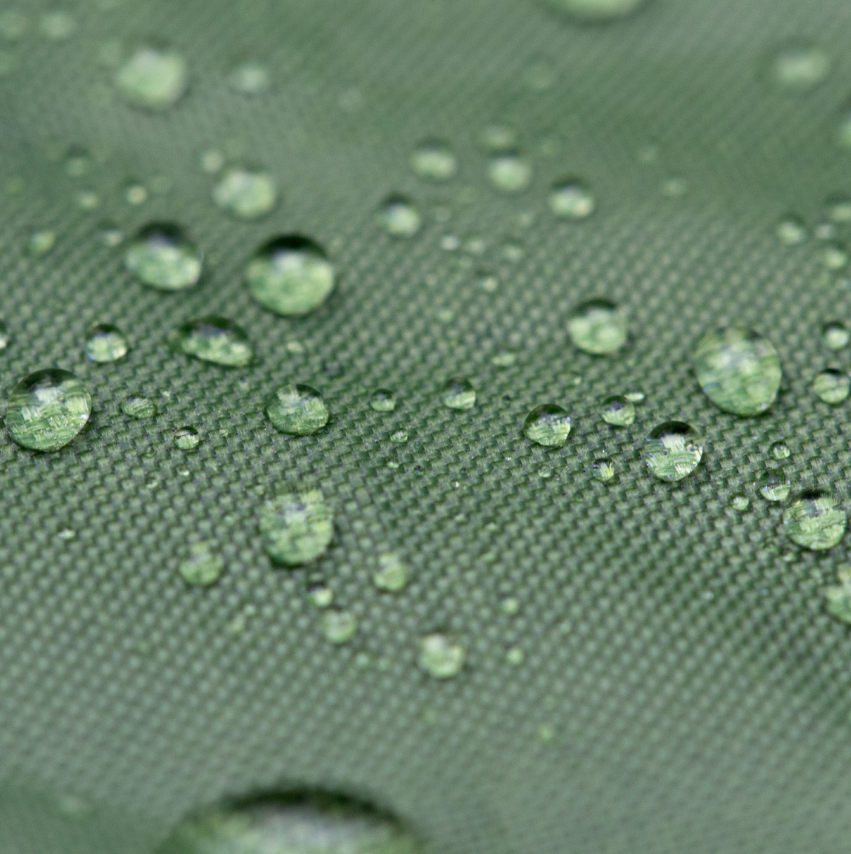
Hydrophobic substances are materials that repel water instead of absorbing it. This behaviour occurs because their molecular structure prevents interaction with water molecules.
These substances are widely used in everyday products, from technical textiles and coatings to electronics and construction materials.
In this guide, we explain what hydrophobic substances are, how they work, and where they are used.
Examples of hydrophobic substances
Common hydrophobic substances include oils, waxes, silicone, Teflon and many technical fabrics used in industrial and textile applications.
What Does Hydrophobic Mean in Chemistry?
At the molecular level, hydrophobic substances are characterized by their lack of affinity for water. They are typically nonpolar molecules, meaning they do not have regions of positive or negative charge. Water molecules, on the other hand, are polar, with a slight positive charge on one end and a slight negative charge on the other, allowing them to form hydrogen bonds with each other and with other polar substances.
How Does Hydrophobicity Work?
Understanding hydrophobicity requires a look at hydrogen bonds. These are strong attractions between water molecules due to their polar nature. The positive and negative ends of different water molecules are attracted to each other, forming a network. When a nonpolar molecule (like oil) is introduced, it disrupts this network.
Here comes the key concept: entropy. The system (water and the nonpolar substance) naturally seeks to increase its entropy, a measure of disorder. Since forming bonds between water and nonpolar molecules creates a more ordered state, the system resists it. This resistance manifests as the hydrophobic effect, causing the nonpolar substance to clump together or be repelled by water.
Key characteristics of hydrophobic materials:
– They repel water instead of absorbing it
– They are typically nonpolar
– They reduce moisture penetration
– They improve durability in demanding environments
Properties of Hydrophobic Materials
Hydrophobic materials possess unique properties that influence their interactions with water:
- Contact angle: This angle measures the water droplet’s shape on a surface. Highly hydrophobic surfaces have a high contact angle (water beads up), while hydrophilic surfaces have a low contact angle (water spreads).
- Surface area: Minimizing surface area exposed to water is a key feature. Hydrophobic molecules often cluster together, forming micelles (ball-like structures) that shield their nonpolar interior from water.
- Superhydrophobic materials: These advanced materials exhibit extreme water repellency, with contact angles exceeding 150 degrees. They often have micro or nanotextured surfaces that further reduce water contact and promote droplet rolling.
Applications of Hydrophobic Materials
Hydrophobicity plays a crucial role in how materials interact with water. For instance:
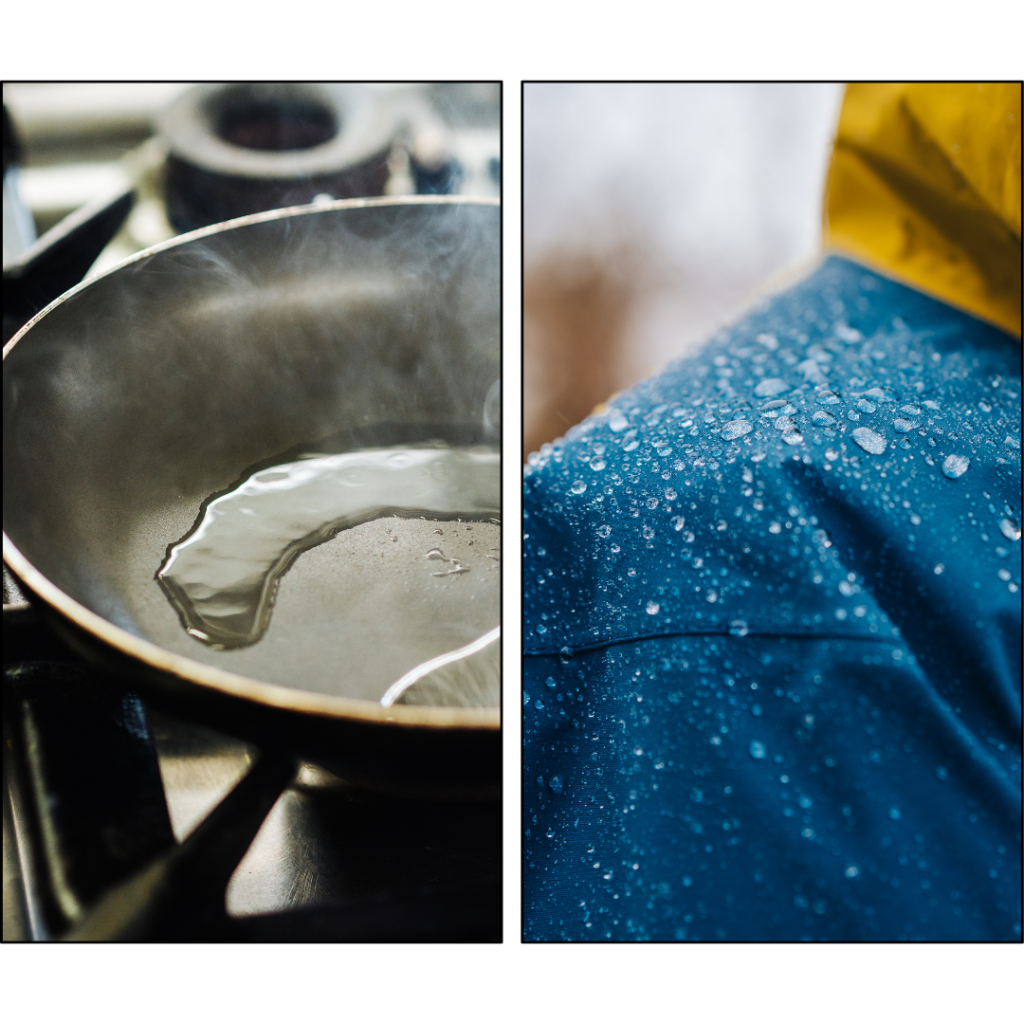
- Textiles: Raincoats and other water-resistant clothing utilize hydrophobic fabrics that repel water, keeping wearers dry.
- Coatings: Paints and coatings with hydrophobic properties protect surfaces from water damage and staining, safeguarding buildings, furniture, and other objects.
- Food packaging: Hydrophobic materials can prevent moisture absorption in food packaging, extending shelf life and preserving quality.
- Biomedical applications: Hydrophobic surfaces in medical devices can repel blood, reducing complications during surgeries. Additionally, they can be used to control drug delivery within the body.
Common Hydrophobic Substances and Their Uses
Hydrophobic materials are everywhere around us. Some common examples include:
- Teflon (polytetrafluoroethylene): Widely used in non-stick cookware, Teflon’s hydrophobic properties prevent food from sticking and make cleaning easier.
- Silicone: Found in waterproof sealants, lubricants, and medical devices, silicone’s hydrophobic nature makes it ideal for creating water-resistant barriers.
- Wax: From car wax protecting vehicles to fruit wax preserving freshness, waxes utilize their hydrophobicity to create a protective layer against moisture and corrosion.
- Gore-Tex: This remarkable fabric used in outdoor apparel offers the best of both worlds: hydrophobicity to repel water and breathability to allow moisture vapor to escape, keeping wearers dry and comfortable.
Advances in Hydrophobic Materials
The field of hydrophobic materials is constantly evolving. Researchers are developing:
- Superhydrophobic surfaces: These materials go beyond repelling water, extending their resistance to other liquids. This holds immense potential for self-cleaning surfaces that resist dirt and grime, as well as anti-fouling coatings for ships and marine equipment.
- Biomimetic materials: Drawing inspiration from nature, scientists are mimicking the hydrophobic structures found in lotus leaves and other organisms to create materials with enhanced water repellency.
- Switchable hydrophobicity: Introducing a revolutionary concept, researchers are developing materials that can change their hydrophobicity based on external stimuli, such as light or temperature. This opens up exciting possibilities for dynamic surfaces and smart materials.
Hydrophobic properties in technical textiles
In contract environments such as hotels, offices or public spaces, hydrophobic materials play a key role in performance and durability.
Technical fabrics with water-repellent properties help prevent moisture absorption, maintain structural integrity and extend product lifespan.
Understanding hydrophobic substances and their properties is crucial for leveraging their benefits in various applications. The hydrophobic effect, driven by the unique interactions between polar and nonpolar molecules, leads to innovative solutions across multiple industries. As research continues to advance, the potential for hydrophobic and superhydrophobic materials will undoubtedly expand, offering even more exciting possibilities for the future.
In summary, hydrophobic substances are vital in shaping modern consumer products. From improving the durability and functionality of everyday items to pioneering advancements in technology and industry, these water-repellent materials are indispensable in our quest for better, more efficient solutions.
Frequently Asked Questions about Hydrophobic Substances
What are hydrophobic substances?
Hydrophobic substances are materials that repel water instead of absorbing it. This happens because their molecular structure is nonpolar, preventing interaction with water molecules.
What does hydrophobic mean?
Hydrophobic means “water-repellent”. Hydrophobic materials do not mix with water and are commonly found in oils, waxes and many technical fabrics.
What are examples of hydrophobic materials?
Common examples of hydrophobic materials include oils, waxes, silicone, Teflon and water-repellent technical textiles used in industrial and contract environments.
Why are hydrophobic materials important?
Hydrophobic materials are important because they improve durability, prevent moisture absorption and are widely used in textiles, coatings, construction and industrial applications.
Is hydrophobic the same as waterproof?
No. Hydrophobic materials repel water, but they are not always completely waterproof. Waterproof materials prevent water penetration entirely, while hydrophobic materials reduce absorption.
Resources
This blog post has provided a basic understanding of hydrophobic substances. For further exploration, consider these resources:
Follow us:

Subscribe to our newsletter
Receive all communications in your email to stay up to date with our news, as well as news and advice about the sector.
Latest published articles


Do you need advice?
We collaborate with you to develop custom designs tailored to the needs of each project, creating the fabric according to aesthetic, quality, or usage requirements.
Get in touch with us, and we will advise you on our products, or request a free sample.
