EN 13773 Explained for Architects: Fire Classification Fabrics for Contract Interiors

Why EN 13773 is a specification decision, not just compliance
In contract interiors, textiles are not purely decorative elements. They play a critical role in safety, performance and regulatory compliance.
For architects and interior designers working in hotels, theatres, offices or public buildings, the EN 13773 determines whether a curtain fabric can be specified and installed within a project.
However, beyond compliance, EN 13773 should be understood as a specification framework. It directly influences material selection, system design and long-term performance.
In practice, selecting the right fabric is not simply about passing a fire test. It is about ensuring that the textile solution remains compliant throughout the lifecycle of the space.
What EN 13773 evaluates in curtain fabrics
EN 13773 is specifically designed to assess the fire behaviour of curtains and drapes, which often represent large vertical surfaces within interior environments.
The standard evaluates:
- ignition behaviour
- flame spread
- contribution to fire development
For specifiers, this translates into a key requirement: The textile must not significantly contribute to the spread of fire in occupied environments.
As curtains are typically installed in large quantities, their performance can directly influence how fire develops within a space. For this reason, EN 13773 is essential in contract applications.
EN 13773 classification: C1, C2 and C3
C1 – Recommended standard for contract interiors
C1 is the highest classification level within EN 13773 and represents the benchmark for most contract applications.
It is typically required in:
- hotels
- hospitals
- theatres
- auditoriums
- public buildings
Fabrics classified as C1 offer a high level of fire performance and are suitable for environments with strict safety requirements.
For architects and specifiers, C1 should be considered the default specification level in most projects.
C2 – Medium performance applications
C2 fabrics provide a moderate level of fire resistance and are generally suitable for spaces with lower risk or less stringent regulatory requirements.
Typical applications include:
- offices
- meeting rooms
- secondary areas within larger projects
While acceptable in certain contexts, C2 may not be sufficient for highly regulated environments.
C3 – Limited or non-contract use
C3 represents the lowest classification level and is rarely suitable for professional contract interiors.
These fabrics are generally not recommended for use in public buildings due to their limited fire performance.
How EN 13773 translates into real textile solutions
For specifiers, the standard itself is only the starting point. What truly matters is how EN 13773 is applied to real textile systems within a project.
Architects do not specify “C1 fabrics” in isolation. They specify solutions such as blackout curtains, sheer fabrics or acoustic textiles, all of which must meet both functional and regulatory requirements.
Blackout and dimout fabrics for hotels and hospitality
In hospitality environments, curtain systems must deliver multiple functions simultaneously:
- total or controlled light reduction
- durability under intensive use
- compliance with fire safety requirements
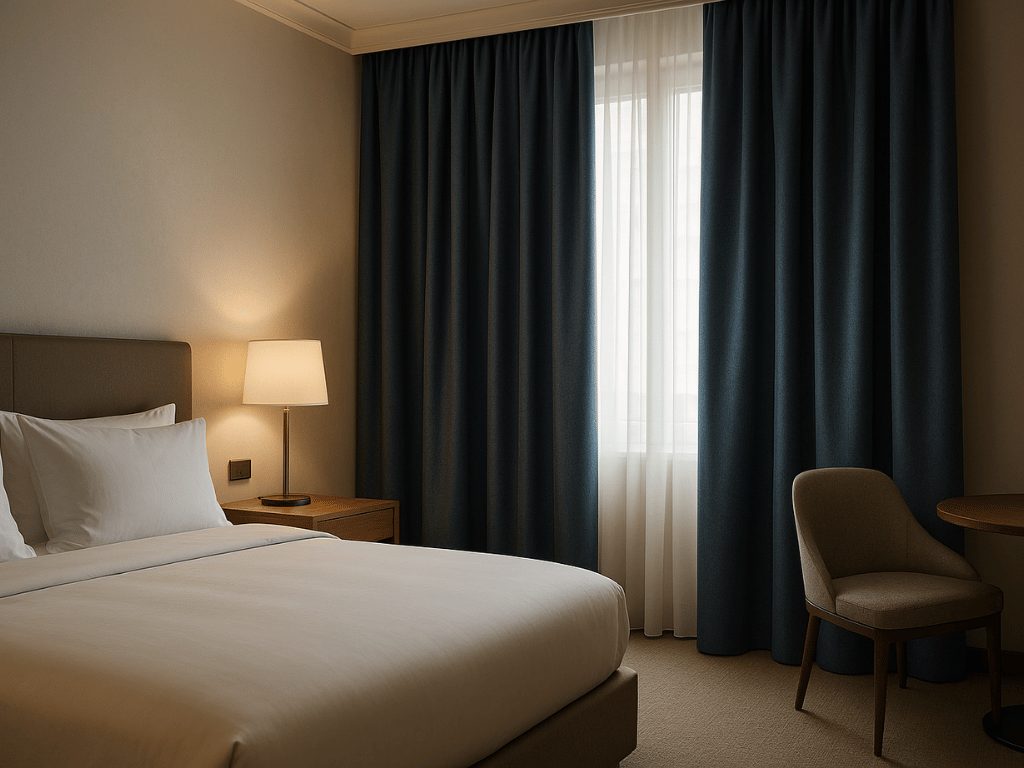
Blackout fabrics provide complete light exclusion, while dimout fabrics allow a softer level of light diffusion. Both must comply with EN 13773 when used in public buildings.
At Dabedan, these requirements are addressed through technical textile solutions specifically developed for contract interiors.
When specifying curtain systems in contract projects, it is essential to define:
- opacity level
- fabric width for large-scale installations
- fire classification (preferably C1)
Sheer fabrics: compliant light diffusion solutions
Sheer fabrics are widely used to diffuse natural light and create a sense of openness within interior spaces. However, they are often overlooked in fire safety specifications.
Despite their lightweight appearance, sheer fabrics must also comply with EN 13773 when used in contract environments.
They provide:
- natural light diffusion
- visual lightness
- compliance with fire safety regulations
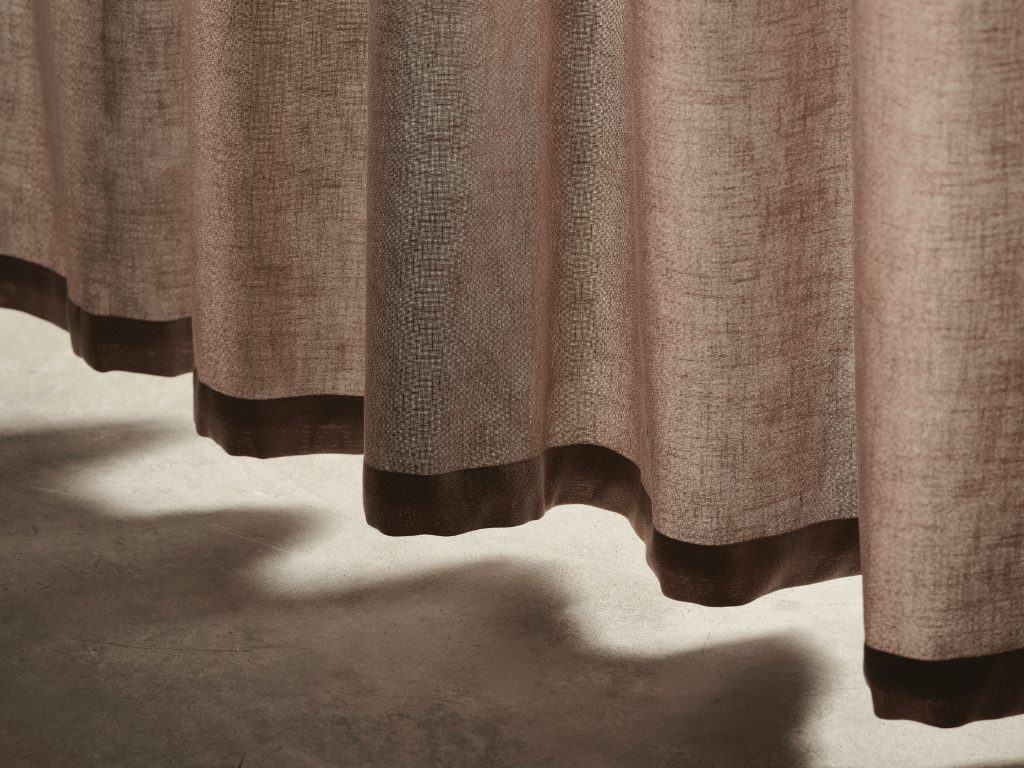
Fire-resistant velvet for theatres and premium interiors
Velvet is commonly specified in environments where both performance and aesthetics are critical.
Typical applications include:
- theatre curtains
- stage backdrops
- premium hospitality interiors
Manufacturers such as Dabedan develop inherently flame retardant velvets designed specifically for contract use and regulatory compliance.
Key advantages include:
- inherent flame retardant properties
- acoustic absorption
- a rich and refined aesthetic

Acoustic fabrics for offices and public spaces
In contemporary interiors, textiles are increasingly used to improve acoustic comfort.
In offices, meeting rooms and public buildings, acoustic fabrics help to:
- reduce reverberation
- improve speech intelligibility
- enhance overall comfort
These solutions must combine:
- acoustic performance
- fire compliance
- integration within architectural systems
EN 13773 vs EN 13501-1: key differences for architects
A common specification error is confusing textile standards with construction material classifications.
- EN 13773 applies to textiles
- EN 13501-1 applies to walls, ceilings and building elements
Understanding this distinction is essential to ensure compliance in project specifications.
Inherent vs treated flame retardant fabrics
One of the most important decisions in textile specification is the type of flame retardancy.
Inherently flame retardant fabrics
In these fabrics, fire resistance is built into the fibre itself.
This ensures:
- permanent performance
- no degradation over time
- no loss of compliance due to washing
Treated flame retardant fabrics
These fabrics rely on a chemical treatment applied after production.
As a result:
- performance may decrease over time
- re-treatment may be required
- long-term compliance is less predictable
For contract interiors, inherently flame retardant fabrics are generally the preferred solution.
Specification checklist for architects
Before approving a textile, it is essential to verify the following:
- EN 13773 classification (C1 recommended)
- Fabric type aligned with the application
- Installation context (curtains, partitions, decorative elements)
- Durability and maintenance requirements
Additional certifications may also be required depending on the project:
- BS 5852
- NF P92-507
- UNI 9175
Common mistakes in contract textile specification
Even in experienced teams, certain issues frequently arise:
- selecting fabrics based only on aesthetics
- specifying treated fabrics in high-use environments
- confusing EN 13773 with EN 13501-1
- failing to consider long-term performance
These issues can lead to project delays, re-specification or compliance risks.
Conclusion: specifying EN 13773 fabrics in real projects
EN 13773 is not simply a regulatory requirement. It is a key parameter in designing safe, durable and high-performance interior environments.
For architects and specifiers, understanding how to apply this standard enables:
- more accurate material selection
- better integration of textiles within the design concept
- long-term compliance and reliability
Fire retardant fabrics for contract interiors
When working on contract projects, selecting the right textile partner is essential.
At Dabedan, we support architects and specifiers with:
- EN 13773 compliant fabrics
- technical documentation and certifications
- solutions tailored to real project requirements
Explore our full range of flame retardant fabrics or get in touch with our team for specification support.
Follow us:

Subscribe to our newsletter
Receive all communications in your email to stay up to date with our news, as well as news and advice about the sector.
Latest published articles


Do you need advice?
We collaborate with you to develop custom designs tailored to the needs of each project, creating the fabric according to aesthetic, quality, or usage requirements.
Get in touch with us, and we will advise you on our products, or request a free sample.
